
How Long Does Oxycodone Stay in Your Urine? A Complete Guide
How long does oxycodone stay in your urine? The answer depends on many conditions, including how you’re using this prescription drug, the dosage, how long you’ve been using it, and other considerations. Whether you’re trying to understand what an opioid drug test can (and cannot) show, or asking because you suspect you might have an oxycodone dependency, this guide gives clear, honest answers about oxycodone detection times. We’ll also explain why urine detection is different from the drug’s half-life, and we’ll walk through the factors that can shift the timeline.
How Long Does Oxycodone Stay in Your Urine?
For most adults with normal kidney and liver function, oxycodone is typically detectable in urine for about 2 to 4 days after the last dose.
That range is a useful guideline, but it is not a guarantee.
Depending on the dose, how long and how often someone has taken it, and the type of test being used, the detection window can be shorter or longer.
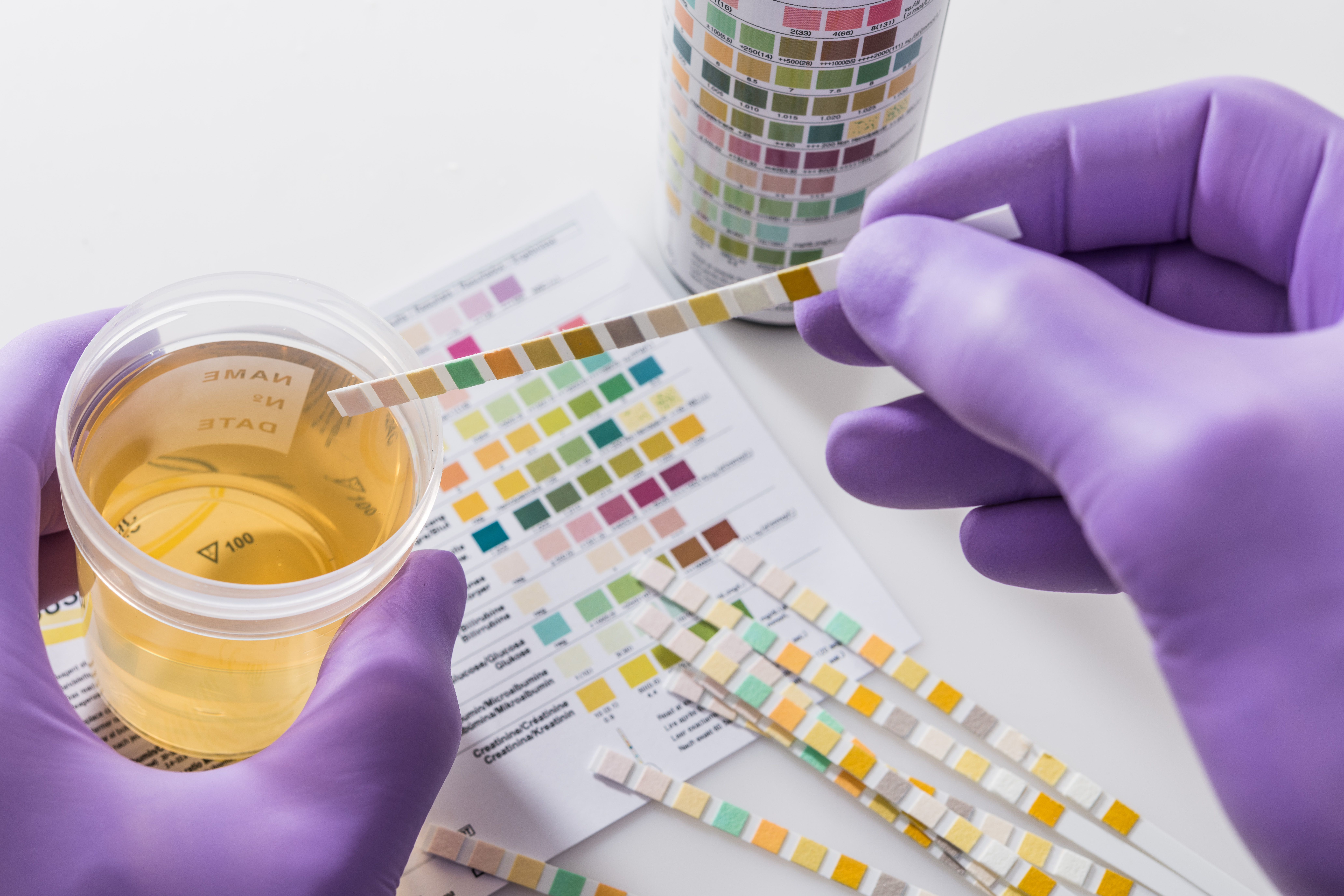
Urine is the most common testing method because oxycodone metabolites concentrate in urine and can remain measurable well after the pain-relieving effects wear off.
Oxycodone Half-Life: What It Means (and What It Doesn’t)
People often assume the oxycodone half-life tells them how long a urine test will stay positive. It doesn’t, at least not directly.
In general:
- Immediate-release (IR) oxycodone has a plasma half-life of roughly 3 to 5 hours
- Extended-release (ER) oxycodone can have a somewhat longer apparent half-life and a longer “active processing” window because the medication is released over time
- Oxycodone may be largely cleared from the bloodstream within about a day (often ~24 hours), but urine detection lasts longer because urine testing detects metabolites, not just the parent drug
- Two key metabolites (noroxycodone and oxymorphone) can remain detectable in urine after blood levels have dropped
Bottom line: the half-life explains why effects fade in hours, but urine testing can remain positive for days.
What Can Extend or Shorten Oxycodone Detection Time in Urine?
The “average” oxycodone detection time assumes a typical adult with average metabolism and no significant organ impairment. Real-world timelines vary.
Here are some factors to consider when answering the question, how long does oxycodone stay in your urine:
- Dose: Higher doses generally produce more metabolites and may extend detectability
- Frequency of use: Consistent daily use can extend the window compared to a single dose
- Duration of use: Weeks or months of regular use can extend detection beyond the typical range
- Formulation: ER (extended-release) products can extend detection compared with a single IR dose because the drug is released and metabolized over a longer period
- Liver function: Metabolism occurs primarily in the liver; impairment can slow clearance
- Kidney function: Kidneys excrete oxycodone/metabolites; reduced function can prolong detection
- Age: Older adults may clear opioids more slowly on average
- Body composition: Distribution in body tissues varies by individual and can affect how quickly the body clears drugs/metabolites
- Hydration level and urine concentration: Dilution can lower measured concentrations, while concentrated urine can make detection more likely
- Other medications/substances: Some substances can alter metabolism, indirectly changing detection time
If you need the most accurate interpretation for a specific situation, the right person to ask is the prescribing clinician or the Medical Review Officer (MRO) associated with the opioid drug test.
Oxycodone Detection by Test Type (Urine vs Blood vs Saliva vs Hair)
Urine is the standard method for workplace and most clinical screening, but it isn’t the only testing method. Here are other oxycodone detection tests and detection windows for each:
Oxycodone Blood Test
Up to ~24 hours (short window; reflects recent use)
Oxycodone Saliva Test
About 1 to 4 days (varies by cutoff, collection, and use pattern)
Oxycodone Urine Test
About 2 to 4 days on average, potentially longer with heavier or prolonged use
Oxycodone Hair Test
Up to 90 days (long retrospective window; often used in forensic/legal contexts more than routine workplace screens). Hair testing is not usually used for routine employment screening, but it may be used in custody cases, certain legal contexts, or specific investigations.
Important: Not All “Opioid Drug Tests” Detect Oxycodone
A major source of confusion is the word “opiates” on drug test panels.
Many basic immunoassay screens are designed to detect morphine-like opiates (often morphine and codeine). Oxycodone is semi-synthetic and may not reliably trigger a standard “opiates” screen at typical cutoffs.
What this means in practice:
- A 5-panel test often includes “opiates,” but that does not automatically mean oxycodone is included
- A 10-panel or 12-panel test is more likely to include an oxycodone-specific assay or expanded opioid testing
- If oxycodone use is suspected or clinically relevant, the safest approach is to order oxycodone specifically (or order confirmatory testing when appropriate)
Immunoassay vs Confirmatory Testing: Why Results Can Differ
Many testing programs use a two-step process:
- Immunoassay screen (rapid test): This is a fast, cost-effective screen that can produce false negatives or false positives depending on the drug and cutoff
- Confirmatory testing (GC–MS or LC–MS/MS): A highly specific test that can identify oxycodone and metabolites with much greater accuracy
If there is a dispute, a high-stakes decision, or a result that does not match the clinical picture, confirmatory testing is the appropriate next step.
Extended-Release Oxycodone (OxyContin) and Urine Detection
Extended-release oxycodone releases medication over a longer period (often 12 hours per dose). That does not necessarily mean detection will double, but it can extend oxycodone detection time compared with a single immediate-release dose, especially with repeated dosing.
Standard urine panels typically do not distinguish between IR and ER formulations. They detect oxycodone and/or its metabolites regardless of which product produced them.
When the Question Points to Something Deeper
Sometimes, the real issue behind the question, “How long does oxycodone stay in your urine?” is not the test itself. It’s the feeling that oxycodone has become something you can’t easily stop.
Physical dependence can develop within weeks of regular use. Signs that oxycodone use may have become a problem include:
- Taking more than prescribed
- Feeling unable to function normally without a dose
- Experiencing withdrawal symptoms when doses are missed
- Using oxycodone to manage emotional distress, not just physical pain
- Hiding use or minimizing how much you’re taking
These are not character flaws. They’re common signs that the brain and body have adapted to the medication and that professional support may be needed to prevent further dependency, or worse, opioid overdose.
What Does Opioid Addiction Treatment in California Look Like?
opioid addiction treatment California at Monterey Bay Recovery looks like getting cutting-edge treatment in a resort-style setting. We provide medically supervised detox, which helps manage withdrawal safely, and our luxury residential treatment addresses the psychological and behavioral drivers of dependence in a private, structured environment.
If oxycodone has moved from a medication to a dependency, treatment usually starts with medical stabilization, especially if use is heavy, long-term, or mixed with other substances. Recovery is possible. You do not need to have everything figured out before you ask for help.

Ready to Take the Next Step?
The question, “How long does oxycodone stay in your urine?” might be more about the role this opioid is playing in your life rather than pinning down detection times for drug tests. If that rings true for you, and oxycodone has become more than a medication in your life, our admissions team is available for a confidential, no-pressure conversation about opioid addiction treatment in California and what options make sense for your situation.
FAQs About Oxycodone Urine Detection and Opioid Drug Testing
Does drinking a lot of water flush oxycodone out of the urine faster?
Not in any meaningful or reliable way. Excessive water intake may dilute the sample, and many testing programs check for dilution and may flag or reject diluted samples. More importantly, the body processes and eliminates oxycodone and its metabolites on its own timeline.
Can a legitimately prescribed oxycodone cause a failed workplace drug test?
Yes. A valid prescription can still produce a positive result on an opioid drug test that includes oxycodone. The proper step is to disclose the prescription to the Medical Review Officer (MRO), either before testing or immediately after a positive is reported, depending on program rules.
What’s the difference between a 5-panel and 10-/12-panel opioid drug test for oxycodone detection?
A typical 5-panel test screens for marijuana, cocaine, amphetamines, PCP, and “opiates” (usually morphine/codeine). Oxycodone may not reliably trigger a standard opioid drug test. A 10- or 12-panel test often includes oxycodone specifically, making detection much more likely.
Can you get a false positive for oxycodone on a drug test?
False positives are less common on oxycodone-specific assays than on broad opiate screens, but they can happen depending on the test. If a false positive is suspected, request confirmatory testing (GC–MS or LC–MS/MS), which is highly specific. Always disclose all medications and supplements you’re taking to the testing provider.
How does oxycodone detection time compare to other opioids in urine?
Oxycodone detection time windows are often similar across many opioids, commonly falling in a 1–4 day range depending on the substance, cutoff, and use pattern. Methadone is a notable exception and can be detectable longer due to its much longer oxycodone half-life.
Contact Us
Discover a transformative recovery experience, blending holistic and traditional modalities with a beautiful natural environment, and setting a foundation for lifelong healing.
"*" indicates required fields